Home » Custom Gym Murals: How to Choose Designs That Actually Motivate Members

Custom Gym Murals: How to Choose Designs That Actually Motivate Members

Custom Gym Wall Murals Orange County

You’re ready to invest in a custom gym mural. Smart move. But now comes the hard part—figuring out what should actually go on that wall.

Most gym owners approach this backwards. They scroll through Pinterest, find something that looks cool, and slap it on their wall. Six months later, they realize it doesn’t match their brand, their members don’t connect with it, and it’s just… there.

Custom gym murals cost $3,000 to $15,000+ depending on size and complexity. That’s too much money to waste on something that doesn’t drive results. Let me show you how to choose designs that actually motivate your members and strengthen your brand.

Start With Your Gym’s Identity, Not Trends

Here’s the biggest mistake: choosing a mural because it’s trending on Instagram.

That epic mountain landscape might look incredible in a Colorado CrossFit studio, but if you’re a boutique studio in Orange County focused on women’s fitness, it sends the wrong message. Your mural needs to match who you are and who you serve.

Ask yourself these questions before even thinking about designs:

  • What’s your training philosophy? Are you about maximum intensity, mindful movement, functional fitness, or aesthetic bodybuilding? Your mural should reflect this immediately.
  • Who are your members? Not who you want them to be—who actually trains at your gym. A 55-year-old retiree getting back in shape needs different visual motivation than a 25-year-old competitive athlete.
  • What separates you from competitors? If three gyms within two miles all have the same “no excuses” aesthetic, you need something different. Your mural should showcase what makes you unique.
  • What do you want members to feel? Pumped up and aggressive? Calm and focused? Empowered and confident? The emotional response drives design choices.

Once you’re clear on these answers, design options become obvious. You’re not choosing from infinite possibilities—you’re choosing from options that actually fit your brand.

Design Elements That Drive Motivation

Not all imagery motivates equally. Some designs make people want to work harder. Others just fill space.

Action Photography vs Static Images

Static images of fitness models posing look great in magazines. They’re terrible for gym murals.

Your members need to see motion. Action shots of athletes mid-movement create energy. A photo of someone in the middle of a clean and jerk, a runner with motion blur, a rock climber reaching for the next hold—these trigger something in people’s brains. They see effort and want to match it.

Static poses make people think about appearance. Action shots make people think about performance. There’s a huge difference.

Typography-Based Murals

Bold typography with motivational phrases works incredibly well when done right.

The key word: when done right.

Your gym motto, phrases your coaches actually say, quotes from members who’ve transformed their lives—these resonate because they’re authentic. One gym we worked with used actual quotes from member testimonials in massive typography across their walls. New members see those transformations and believe it’s possible for them.

Typography murals also photograph exceptionally well. Clean, bold text with your branding creates perfect Instagram content. Every member photo includes your message.

Abstract and Geometric Designs

Not every mural needs literal imagery. Abstract patterns and geometric designs work great for specific situations.

Boutique studios often prefer this approach. It’s modern, clean, and doesn’t force a specific emotional tone. A well-designed abstract mural creates visual interest without dictating mood. This works when your space hosts multiple workout types—yoga, Pilates, barre, HIIT—that each need different energy levels.

The downside: abstract designs are harder to get right. They can easily look like generic corporate art. If you go this route, work with designers who understand fitness environments.

Anatomical and Educational Murals

Muscle diagrams, movement mechanics, exercise form guides—educational murals serve dual purposes. They motivate and inform.

These work exceptionally well in strength training areas. A detailed anatomical mural showing muscle groups helps lifters understand what they’re working. It reinforces that your gym takes training seriously.

The risk: they can feel clinical if not balanced with other design elements. Use them strategically in specific zones rather than making them your primary aesthetic.

Color Psychology: What Actually Works in Gyms

Colors aren’t just aesthetic choices. They trigger psychological responses that directly impact workout performance.

High-Energy Colors for Intensity Zones

Red, orange, and bright yellow increase heart rate and energy. These colors belong in your high-intensity areas.

Cardio zones, heavy lifting sections, and group fitness rooms benefit from energizing colors. They create urgency and push people harder during tough sets or the last minutes of conditioning work.

But don’t overdo it. Too much red everywhere can feel overwhelming or aggressive. Use these colors strategically as accents or in specific zones.

Calming Colors for Recovery Areas

Blue and green promote focus and calm. These work perfectly in stretching zones, recovery areas, and mobility sections.

After an intense workout, members need to downshift. Cool colors help lower heart rate and encourage proper cooldown. This is also where yoga or meditation classes happen—the aesthetic needs to support that energy.

Neutral Base with Bold Accents

The safest approach for most gyms: neutral base colors (black, gray, white) with bold color accents that match your brand.

This gives you flexibility. The neutral base feels professional and won’t overwhelm your space. Bold accents in your brand colors create visual interest and strengthen brand recognition without forcing a specific mood.

Neutrals also photograph well with any lighting. Your members’ Instagram posts won’t look washed out or color-distorted.

Size and Placement Decisions

Where your mural goes matters as much as what’s on it.

Full Wall vs Accent Murals

Full wall murals make massive statements. They transform spaces completely and create that “wow” moment when people walk in. But they’re expensive and bold. If you’re not confident in the design, that’s a lot of wall space committed to something you might regret.

Accent murals give you flexibility. A well-placed 8×12 foot mural on a feature wall delivers impact without dominating your entire space. You can have multiple accent murals in different zones, each matching the purpose of that area.

Most gyms benefit from starting with one feature wall mural. See how members respond. Then expand if it makes sense.

High-Traffic vs Training Zones

High-traffic areas (entrance, reception, main corridors) should showcase your brand identity. This is where you want your logo, your colors, and imagery that represents your overall vibe. Every tour walks through here. Make it count.

Training zones can be more specific. Your squat rack area might have different imagery than your cardio section. Members spending 45 minutes in one zone need visuals that support that specific workout type.

Backdrop Considerations for Member Photos

Smart gym owners design murals with social media in mind. Your walls will end up on Instagram whether you plan for it or not. Make them worth posting.

Place your most photogenic murals near mirrors or in well-lit areas. Include your logo or gym name subtly in the design. Every member photo becomes free advertising when your branding is visible.

Avoid busy, cluttered designs in photo-heavy areas. Clean, bold imagery photographs better than complex scenes with tons of detail.

Matching Murals to Different Gym Types

What works for a CrossFit box won’t work for a yoga studio. Your gym type should guide design choices.

CrossFit Boxes and Functional Fitness Gyms

Raw, industrial aesthetics dominate here. Your members expect grit.

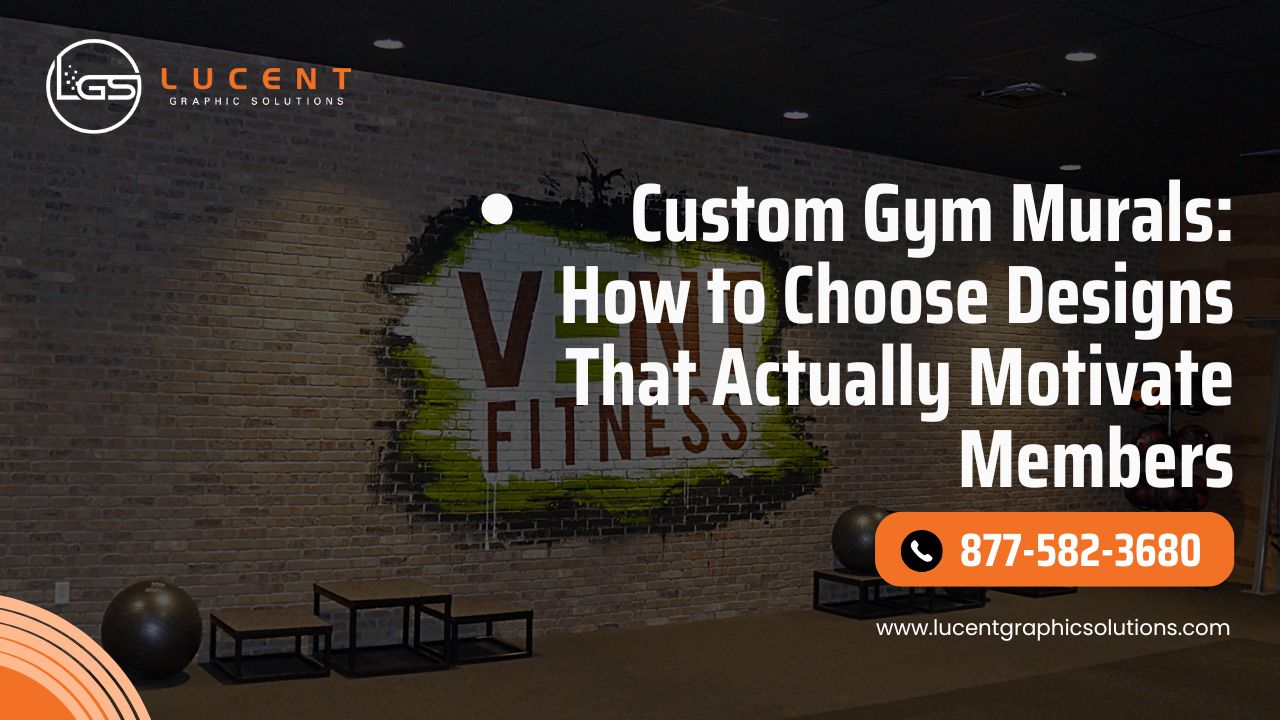
Think exposed brick textures, weathered concrete, chains, steel. Action photography of Olympic lifts, muddy obstacle course races, or gritty training scenes. Bold, aggressive typography that matches the intensity.

Color palette: blacks, grays, steel blues, rust oranges. Nothing soft or polished. The aesthetic should say “this is where hard work happens.”

Boutique Fitness Studios

Clean, aspirational, Instagram-ready. Your members want transformation and they want it to look good.

Lifestyle imagery showing fit, confident people living their best lives. Elegant typography with empowering messages. Soft gradients or geometric patterns in on-brand colors. Everything should photograph beautifully.

Color palette: depends on your brand, but typically cleaner and brighter. Blush pinks, mint greens, soft purples, or bold teals work well. Nothing too aggressive.

Traditional Commercial Gyms

You serve everyone from teenagers to young professionals, beginners to advanced athletes. Your murals need broad appeal.

Diverse imagery showing different ages, body types, and fitness levels. Motivational but not intimidating. Professional but not clinical.

Typography works well here—motivational phrases that resonate with general fitness goals. Avoid imagery that’s too specific to one training style.

Color palette: balanced approach. Use your brand colors but keep them moderate. Nothing too aggressive or too soft.

Yoga and Pilates Studios

Calming, natural, mindful aesthetics. Your members are here to escape stress, not amplify it.

Nature-inspired murals (mountains, forests, water), flowing abstract patterns, minimal geometric designs. If you use typography, keep it philosophical or mindfulness-focused.

Color palette: earth tones, soft blues and greens, warm neutrals. Avoid harsh contrasts or aggressive colors.

Specialty Training Facilities

MMA gyms, boxing clubs, Olympic weightlifting gyms—these need sport-specific imagery.

Show the actual sport. Boxing murals in boxing gyms, wrestling imagery in wrestling facilities. Your members are here for a specific purpose. The walls should reflect absolute commitment to that discipline.

The Design Process: What to Expect

Here’s how custom gym mural projects actually work when you hire professionals.

Initial Consultation and Space Assessment

We start by visiting your facility. We need to see your space, understand your lighting, measure walls, and assess surface conditions.

This is where we discuss your vision. What do you want members to feel? What imagery resonates with you? What definitely doesn’t work for your brand?

We’ll look at your existing branding, your logo, your color palette. The mural needs to integrate seamlessly with everything else in your space.

Design Concepts and Mockups

Within a few weeks, you’ll see a design concept. Not sketches—full mockups showing exactly how the mural will look on your actual wall at actual scale.

You’ll see colors accurately, understand proportions, and get a real sense of the final result. No surprises during installation.

Most gym owners immediately know which direction feels right. If you don’t, we refine and create additional options until you’re confident.

Material Selection for Durability

Custom gym murals need commercial-grade materials. Standard vinyl won’t survive in fitness environments.

At Lucent Graphic Solutions, we use DreamScape materials specifically designed for high-traffic commercial spaces. The Matte finish eliminates glare from gym lighting. The Suede texture adds depth while resisting fingerprints and smudges.

These materials handle humidity, temperature changes, and constant contact. You’re looking at 5-7 years minimum lifespan versus 12-18 months for cheap alternatives.

Professional Installation

Installation timing matters. For 24-hour gyms, we work overnight. For studios with evening classes, we start after your last session.

A large feature wall mural typically takes 6-10 hours to install properly. We prep surfaces, ensure perfect alignment, eliminate bubbles and wrinkles, and seal everything against moisture.

You close with an empty wall and open with a completed mural. Zero disruption to your operations.

Common Mural Mistakes That Waste Money

I’ve seen gym owners make these mistakes repeatedly. Learn from their expensive lessons.

Choosing Designs That Don’t Match Your Brand

That aggressive, hardcore aesthetic looks cool, but if you’re a beginner-friendly gym focused on helping people start their fitness journey, it scares off your target market.

Your mural needs to attract the members you actually want, not the members you think you should want.

Using Cliché Imagery

Lions roaring, wolves howling, warriors with swords—these have been done to death. They’re not motivating when everyone’s seen them a thousand times.

Custom doesn’t mean original photography (though that’s ideal). It means choosing or creating imagery that’s specific to your gym, your location, or your community. Make it yours.

Ignoring Lighting and Viewing Distance

A design that looks perfect on a computer screen can fail on a 20-foot wall in your actual lighting.

Dark murals in poorly-lit areas disappear. Complex details look great up close but become muddy from 30 feet away. Text that seems large in mockups becomes unreadable from across the room.

Professional designers understand large-format design principles and account for your specific space conditions.

Going Too Trendy

Current design trends change every 2-3 years. Your mural needs to last 5-7 years minimum.

That ultra-trendy design that’s everywhere on Instagram right now will look dated in 18 months. Choose designs with staying power. Classic, bold aesthetics age better than hyper-trendy ones.

Skipping Professional Installation

Installing a large mural isn’t a weekend DIY project. Poor installation shows immediately—bubbles, wrinkles, misaligned sections, visible seams.

You’ve already invested thousands in the design and materials. Professional installation ensures it looks as good in reality as it did in mockups. Plus you get warranties and guarantees you don’t have with DIY.

Making Your Decision

You now understand what makes custom gym murals effective. The decision comes down to this: does the investment make sense for your business?

If you’re competing in a crowded market (and in Orange County, you definitely are), environment matters. Your equipment is the same as everyone else’s. Your prices are similar. The difference is how your space makes people feel.

Custom murals create that differentiation. They strengthen your brand, motivate your members, and turn your facility into content that promotes itself.

At Lucent Graphic Solutions, we’ve designed and installed custom murals for CrossFit boxes, boutique studios, traditional gyms, and specialty facilities across Orange County. We handle everything from initial concept to final installation.

Ready to see what’s possible for your space? Contact us for a free consultation. We’ll visit your facility, discuss your vision, and show you mockups of exactly how custom murals would transform your walls.

Check out our wall graphics services to see examples of our work, or reach out directly to schedule your consultation.

Your walls are either helping you compete or holding you back. Let’s make them work for you.

FAQs

Q. How long does the design process take?

From initial consultation to seeing design mockups: about one week. Revisions add a few days. Once you approve the design, production takes 3-5 days and installation takes 6-10 hours depending on mural size. Total timeline: 2-3 weeks typically.

Q. Can I use my own images or photos?

Yes, but they need to be high-resolution enough for large-format printing. Most phone photos won’t work. Professional photography or licensed stock images ensure your mural looks crisp and clear at 20+ feet wide.

Q. What if I want to change the mural in a few years?

Professional-grade murals remove cleanly without damaging walls. When you’re ready for an update, we can remove the old mural and install new designs. Many gyms update murals every 3-5 years to keep their space fresh.

Q. Do murals work on textured walls?

Yes, but surface prep is critical. Heavily textured walls might need smoothing for best results. We assess wall conditions during consultation and recommend any prep work needed before installation.

Q. Can I combine murals with other wall graphics?

Absolutely. Many gyms use large murals on feature walls and smaller graphics or typography in other zones. We help you create a cohesive visual strategy across your entire facility.

Q. What about copyright issues with images?

We only use properly licensed images or create custom designs. You’ll never have copyright problems with murals we design and install. If you provide images, you’re responsible for ensuring you have rights to use them commercially.

Please enable JavaScript in your browser to complete this form.

Ready for Wrap?
Want Custom Wraps or Graphics? Reach Out Now!