Home » Wall Graphics for Hospitals: Benefits, Ideas, and Best Practices

Wall Graphics for Hospitals: Benefits, Ideas, and Best Practices

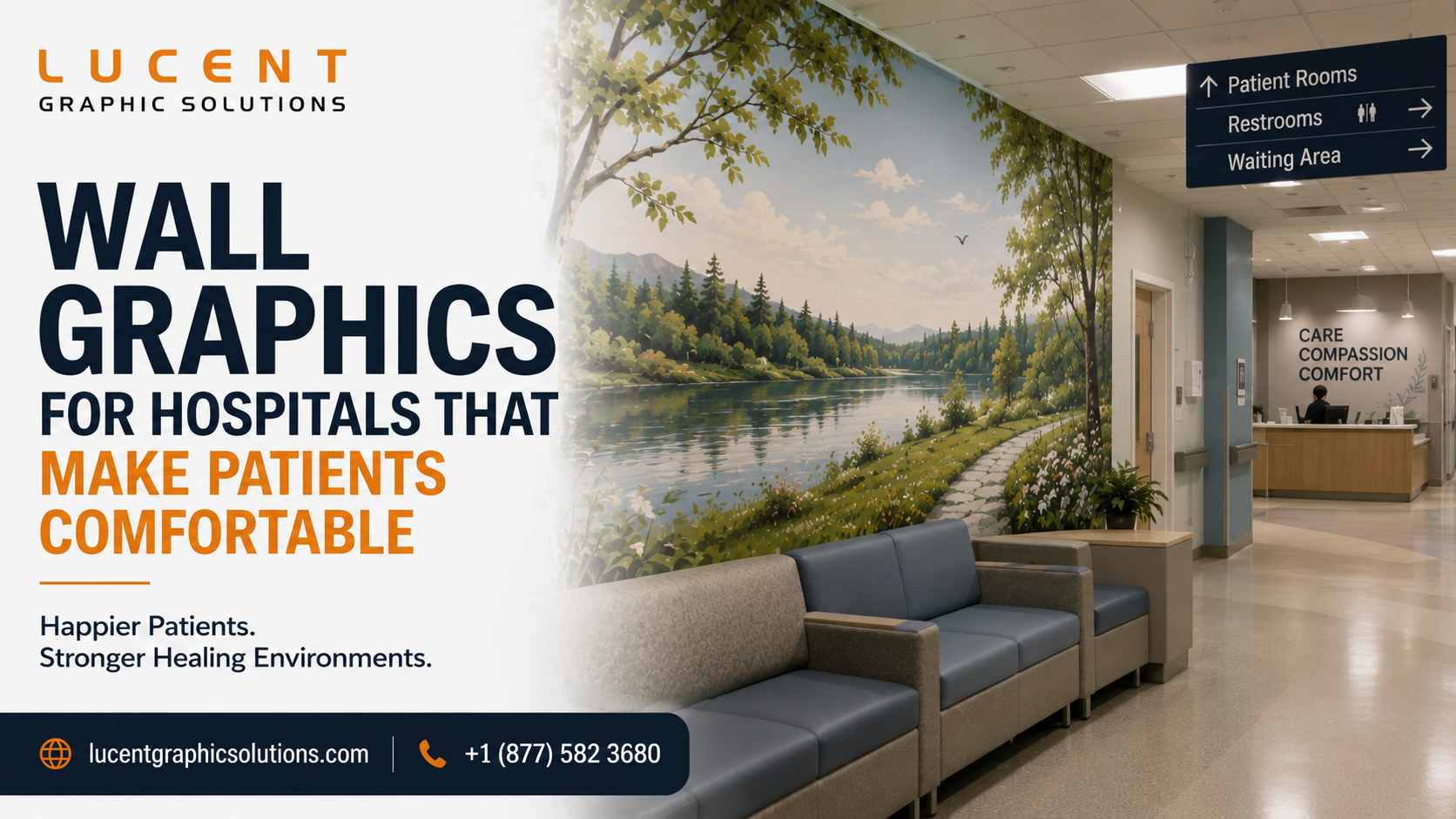
Wall Graphics for Hospitals That Make Patients Comfortable

Wall graphics for hospitals do something a fresh coat of paint can’t: they turn a clinical corridor into a space that feels considered, calmer, and easier to navigate. A hospital visit is stressful enough without blank walls and confusing hallways making it worse. This guide covers what actually works inside a working healthcare facility, what it costs, and how installation happens without disrupting patient care.

What Are Wall Graphics for Hospitals?

They are printed vinyl murals, wraps, or decals installed on interior walls to support wayfinding, reduce clinical starkness, and reinforce a facility’s identity. They’re used in lobbies, corridors, waiting rooms, and pediatric wings. Healthcare facilities choose them over paint because graphics can combine imagery, directional cues, and brand elements in one durable surface.

Why Do Healthcare Facilities Need Custom Wall Graphics?

A hospital corridor lined with bare walls and small paper signs tells visitors nothing except that they’re lost. Custom wall graphics for hospitals replace that with clear, large-format direction paired with imagery that softens an otherwise clinical space. We worked with a community hospital in Orange County where visitors regularly missed the turn to radiology because the existing signage was letter-sized and mounted above eye level.

After we installed a large directional wall graphic at that junction, the front desk told us wrong-turn questions dropped noticeably within the first month. Wall graphics for healthcare facilities aren’t just decoration in a case like that. They solve a real operational problem: staff spending time redirecting lost visitors instead of doing their jobs.

How Wall Graphics Improve Patient Experience

Wall graphics improve patient experience by giving people something calming to focus on during moments of high stress, whether that’s a nature scene in an imaging waiting room or a simple wayfinding graphic that removes the fear of getting lost. Research on healthcare environments consistently links visual distraction and clear navigation to lower reported anxiety. A hospital that invests in this isn’t just decorating; it’s addressing a documented part of the patient experience.

We recommend starting with the waiting areas that see the longest dwell times, like imaging, infusion, or pre-op. Those are the rooms where patients sit with their thoughts the longest, and a well-designed wall graphic gives them somewhere else to look.

What Are the Best Wall Graphics for Hospitals?

The best wall graphics for hospitals match the specific emotional and functional need of the space, rather than applying one design across the entire building. Below are the four types we install most often in healthcare settings, based on what facilities actually request.

Wayfinding and Directional Murals

Large-format directional graphics placed at major intersections cut down on visitors getting lost and staff time spent redirecting them. These typically combine a simple icon system with clear typography sized for reading from a distance. We recommend testing icon clarity with actual patients and visitors before finalizing a design, since what reads clearly to a design team doesn’t always read clearly to someone anxious and in a hurry.

Calming Nature and Biophilic Wall Graphics

Nature imagery, forest scenes, and abstract biophilic patterns are commonly requested for imaging suites, infusion centers, and pre-op areas where patients wait the longest. A regional medical center we worked with installed a forest-scene mural in its infusion center, and nursing staff told us several long-term patients specifically mentioned it during their visits. This option works best where patients are seated and facing the same wall for an extended period.

Pediatric Wing Wall Graphics

Bright, character-driven murals in pediatric wings help reduce fear in young patients without feeling like a cartoon theme park. We recommend working with your clinical staff on the specific imagery, since certain colors and characters can be distressing to children who associate them with prior medical experiences. A children’s hospital wing we installed graphics for specifically avoided any imagery resembling medical equipment, based on feedback from their child life specialists.

Donor Recognition and Community Wall Graphics

Hospitals increasingly use wall graphics instead of traditional plaques to recognize donors or highlight community partnerships. These work well in lobbies and main corridors where foot traffic is highest. Keep the design consistent with your facility’s actual brand guidelines, since a donor wall that looks disconnected from the rest of the building can read as an afterthought.

Hospital Wall Graphics Options Compared

This table compares the hospital wall graphics formats our crew installs most often, matched to where in a facility they tend to perform best.

Graphic Type Typical Lifespan Best Placement Approx. Install Time
Wayfinding mural 5–7 years Corridor intersections, elevator lobbies 1–2 days
Biophilic/nature mural 5–7 years Imaging, infusion, pre-op waiting areas 1 day
Pediatric wing graphic 4–6 years Pediatric corridors, exam rooms 1–2 days
Donor recognition wall 5–7 years Main lobby, entrance corridor Half day

How Much Does Hospital Wall Graphics Installation Cost in OC?

Hospital wall graphics installation cost depends mainly on square footage, the number of wayfinding zones involved, and whether the material needs to meet a specific fire rating. A single lobby accent wall typically costs less than a comprehensive wayfinding overhaul spanning multiple floors. Facilities with strict infection-control requirements may also pay more for materials designed to withstand frequent hospital-grade disinfecting.

We don’t quote hospital projects without seeing floor plans and photos first, since compliance requirements vary by facility and by state. Any installer quoting a flat number before reviewing your space and local code requirements is skipping a step that matters.

How to Install Hospital Wall Graphics Without Disrupting Patient Care

  1. Walk the space with facility staff to flag active-care zones.
  2. Confirm fire rating and infection-control requirements for the material.
  3. Schedule installation during overnight or low-census hours.
  4. Set up containment barriers to limit dust and noise near patients.
  5. Clean and prep the wall using facility-approved products only.
  6. Apply the graphic in sections, pausing near active patient rooms.
  7. Remove containment and inspect the finished install with staff present.

Skipping step four is the fastest way to draw a complaint from a nursing unit mid-shift. Even a quiet vinyl install can feel disruptive next to a patient room if there’s no visible containment protecting the space.

What Materials Work Best for Large Format Wall Graphics for Hospitals?

Large format wall graphics for hospitals generally need low-VOC vinyl film paired with a cleanable, disinfectant-resistant laminate rated for frequent wiping. Many facilities also require Class A fire-rated wall coverings under local building code, so confirm this with your facility’s safety officer before finalizing material. Standard interior vinyl used in retail or office settings often isn’t rated for hospital-grade cleaning chemicals.

We steer every healthcare client toward the higher-grade laminate in patient-facing corridors, even though it costs more than a standard finish. A facility that installs standard laminate near a busy nurses’ station typically sees discoloration within a year from repeated disinfectant wiping, and replacing that wall costs more than choosing the right material the first time.

Hospital Wall Murals: What to Consider Before You Order

Hospital wall murals should be reviewed by clinical staff before final approval, not just facilities or marketing teams. What reads as calming to a design team can read differently to patients with specific conditions, especially in oncology, pediatrics, or behavioral health units. Involve a patient experience or child life specialist early if your facility has one.

Lighting in clinical spaces tends to be harsher and more consistent than retail or hospitality settings, which changes how colors render on the wall. Ask for a physical color proof under your actual corridor lighting, not a rendering viewed on a laptop screen. We’ve had healthcare clients approve a design digitally only to find the printed colors read colder under fluorescent lighting than expected.

Best Practices for Hospital Wall Wrap Installation

Hospital wall wrap installation should always begin with a compliance review, not a design review. Confirm ADA wayfinding requirements, fire code ratings, and infection-control standards with your facility’s safety officer before any material is ordered. Skipping this step is the single most common reason healthcare wall graphic projects get delayed or reworked.

We also recommend involving your infection prevention team early, particularly for installs near operating rooms, ICUs, or isolation units. A hospital we worked with in Orange County required us to use specific low-particulate cleaning protocols near its ICU corridor, which added time but wasn’t something we could have planned around without asking first.

Get Wall Graphics That Support Your Facility’s Goals

If you’re weighing wall graphics for hospitals against a standard repaint or a paper signage upgrade, we’d point you toward graphics for any corridor or waiting area where patients and visitors spend real time. Paint alone won’t solve a wayfinding problem or soften a clinical space the way a well-designed mural can. We’ve worked with healthcare facilities across Orange County to balance compliance requirements with a genuinely more welcoming environment.

Related reading: our comparison of custom wall wraps versus paint, our piece on why wall graphics beat paint every time, and how smart businesses are using custom wall graphics across different industries. We’ve also covered wall wraps for business branding, wall graphics for offices and office wall murals for businesses if you manage a mixed-use medical office building, and wall lettering for business if simple typography fits a specific space better than a full mural.

The Agency for Healthcare Research and Quality publishes ongoing research connecting the physical care environment to patient experience outcomes. The Center for Health Design offers additional resources specific to evidence-based healthcare design. For ADA wayfinding requirements, the ADA National Network is a useful starting reference before finalizing any signage or graphic plan.

If you’d like to see what wall graphics could look like in your hospital or healthcare facility, reach out to our team for a walkthrough and a no-obligation mockup of your actual space. You can get in touch through our contact page, call us at 877-582-3680, or email info@lucentgraphicsolutions.com. We’ll review your compliance requirements alongside your design goals before recommending any material.

Common Questions About Wall Graphics for Hospitals

Do hospital wall graphics need to meet fire code requirements?

Yes, many jurisdictions require Class A fire-rated wall coverings in healthcare facilities. Confirm exact requirements with your local building department and facility safety officer before ordering materials.

How long do wall graphics last in a hospital setting?

Vinyl wall graphics for hospitals typically last 5 to 7 years in standard corridors, though high-touch areas cleaned with harsh disinfectants may need replacement closer to 4 to 5 years.

Can hospital wall graphics support ADA wayfinding compliance?

Yes, when designed with appropriate contrast, text size, and placement height, wall graphics can support ADA wayfinding standards. They should supplement, not replace, any required tactile or Braille signage.

Do wall graphics help reduce patient anxiety?

Research on healthcare environments links calming visual elements and clear wayfinding to lower reported patient stress. Wall graphics addressing both factors together tend to have the strongest effect.

How much does hospital wall graphics installation typically cost?

Cost depends on square footage, fire rating requirements, and infection-control material needs, so a credible quote requires floor plans and photos. Be cautious of flat per-square-foot pricing offered without a facility walkthrough.

Can wall graphics be installed without disrupting hospital operations?

Yes, when scheduled during overnight or low-census hours with proper containment barriers. Experienced installers coordinate directly with facility staff to avoid active patient care areas.

What's the difference between hospital wall wraps and hospital wall murals?

Hospital wall wraps typically cover an entire wall or large surface in one continuous design, while murals can be scaled to a single accent area. Both use similar cleanable, low-VOC vinyl material suited for healthcare environments.